
CYCLING IN TENERIFE
Volcanic roads, winter sun and one very long way up Mount Teide.
WHY TENERIFE
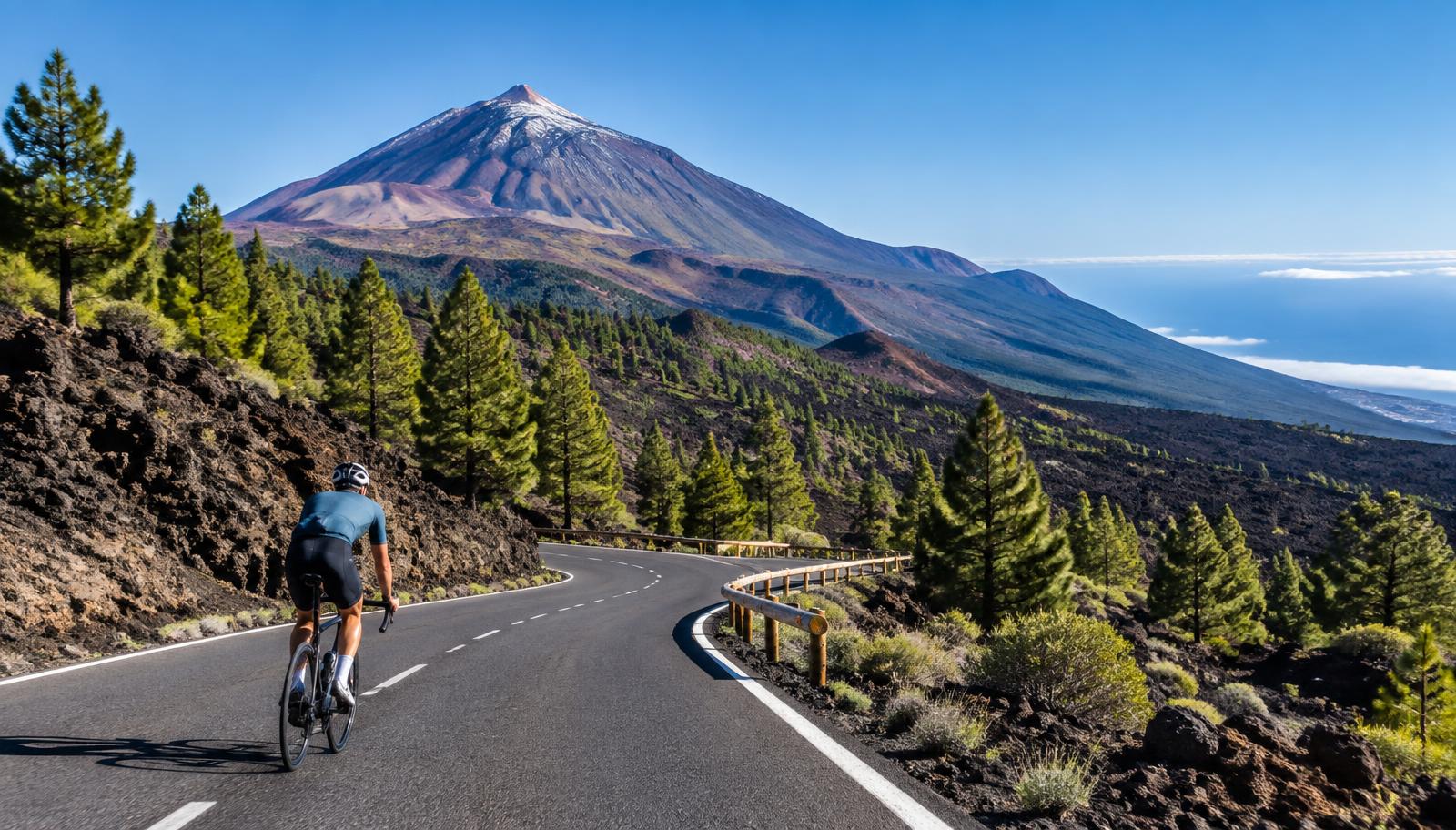
Tenerife is built around one enormous volcano. Roads leave the coast, cross pine forest and lava fields, and keep climbing until the air thins above 2,000 metres. The reliable winter weather makes it a favourite when mainland Europe is cold.
THE SIGNATURE CLIMBS
| Climb | Character | What to expect |
|---|---|---|
| Teide from Vilaflor | Open lava landscape | A long, steady ascent with little shelter near the top. |
| Teide from La Esperanza | Forest then volcano | The greenest approach and a relentless day from the coast. |
| Masca | Short and steep | Tight bends and hard ramps in the island's dramatic north-west. |
Charts sample the terrain between points on the upper approaches, not the full road ascent from the coast. Distances and gradients are indicative, not a GPS route profile.
WHERE TO BASE YOURSELF
Costa Adeje or Los Cristianos
Warm, convenient and close to the Vilaflor approach. The first kilometres out of the resorts are busy, but the road soon opens.
Puerto de la Cruz
A cooler, greener northern base with steep access roads and easy reach of La Orotava and the La Esperanza approach.
PRACTICAL NOTES
- Carry layers: a warm coast can become a cold summit descent.
- Start conservatively. Climbs regularly last two to four hours.
- Take more water than you expect; services are sparse inside the national park.
- Spend band: mid-range, with strong value outside peak holiday weeks.
FAQ
When is the best time to cycle in Tenerife?
How fit do I need to be?
BUILD THE DIESEL ENGINE
Teide is a pacing test. Build long sweet-spot efforts indoors so the final hour still feels like cycling rather than negotiation.