
CYCLING IN THE DOLOMITES
Compact mountain loops beneath some of the most dramatic peaks in cycling.
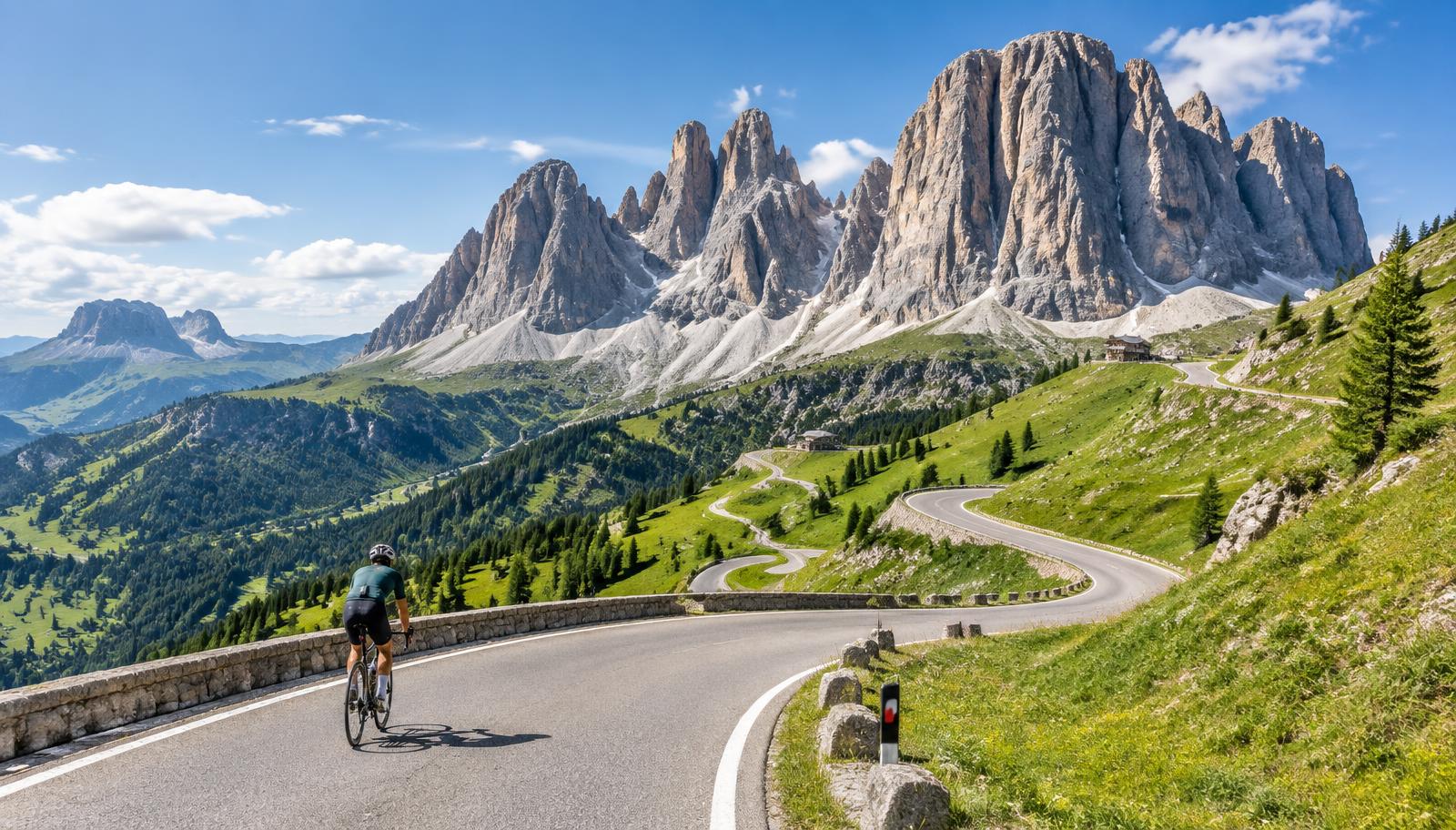
WHY THE DOLOMITES
The Dolomites put major passes unusually close together. From Alta Badia or Val di Fassa you can link several famous climbs without long valley transfers, while pale limestone towers make nearly every bend look absurdly good.
THE ESSENTIAL PASSES
| Pass | Character | Best use |
|---|---|---|
| Passo Sella | Short, spectacular and exposed | The visual highlight of the Sella Ronda. |
| Passo Gardena | Steady with broad views | A rhythmic climb from Corvara. |
| Passo Pordoi | Long hairpin staircase | The classic Giro road from Arabba or Canazei. |
| Passo Giau | Steeper and more isolated | The hard day when the Sella Ronda feels too friendly. |
Elevation is sampled between climb endpoints rather than along every hairpin; use the profiles as a terrain preview, not a GPS route.
THE ROUTE TO RIDE
The Sella Ronda
Four passes — Campolongo, Gardena, Sella and Pordoi — form a compact loop around the Sella massif. Ride it in either direction, start early and allow time for the views rather than treating every summit as a finish line.
PRACTICAL NOTES
- Base in Corvara for Alta Badia access or Canazei for Val di Fassa.
- June to September is the normal road season; high passes can still turn cold quickly.
- Traffic builds late morning, especially on sunny weekends.
- Spend band: mid to high, with better value away from the most famous villages.
FAQ
Is the Sella Ronda difficult?
When should I ride the Dolomites?
TRAIN FOR REPEATED CLIMBS
The Dolomites rarely stop after one pass. Build repeatable threshold efforts and practise eating between them.